Tichelaar Makkum medium to large tin-glazed handpainted Delft polychrome style jug / pitcher - RESERVED for Marcus
$113.81
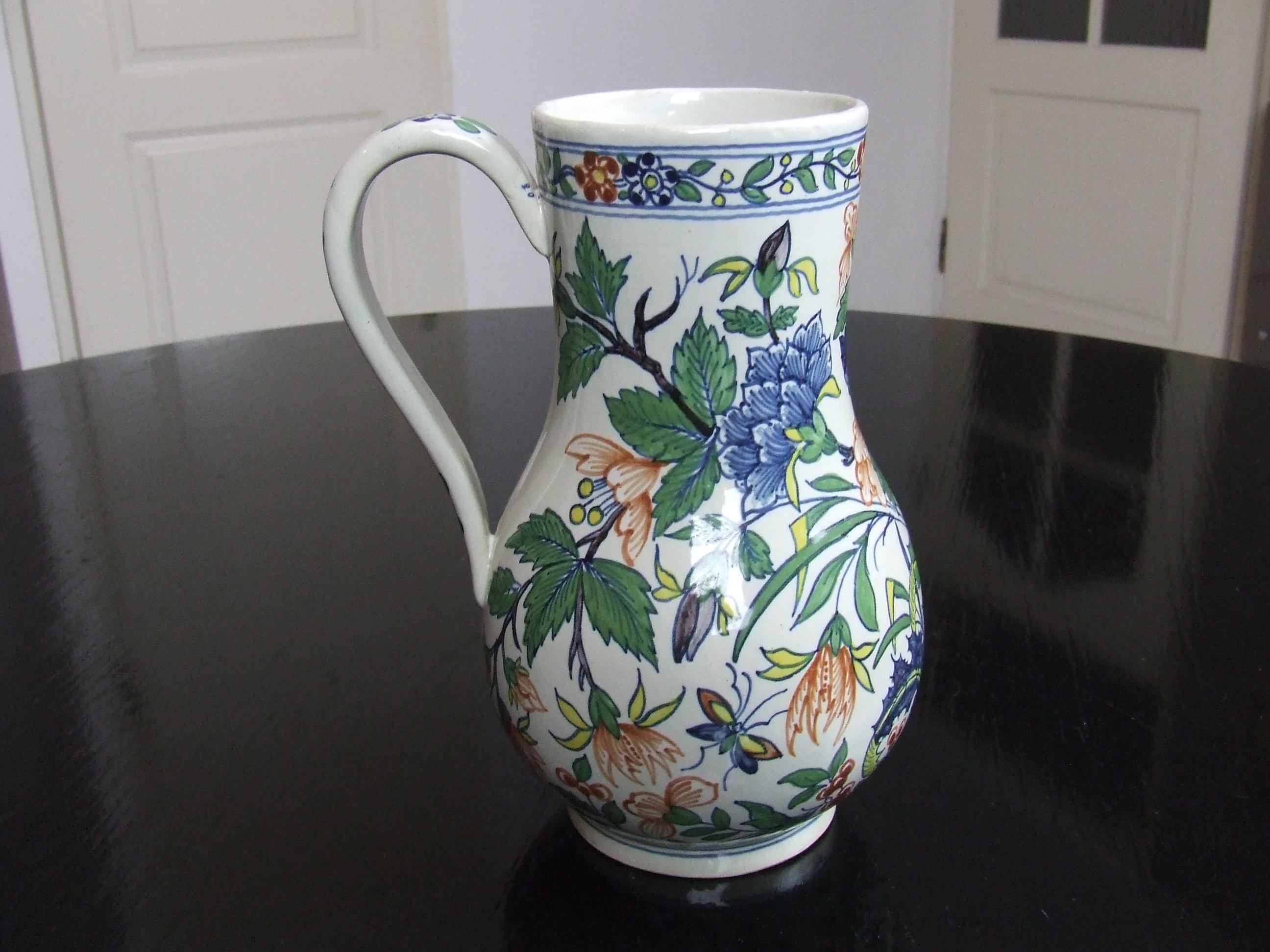
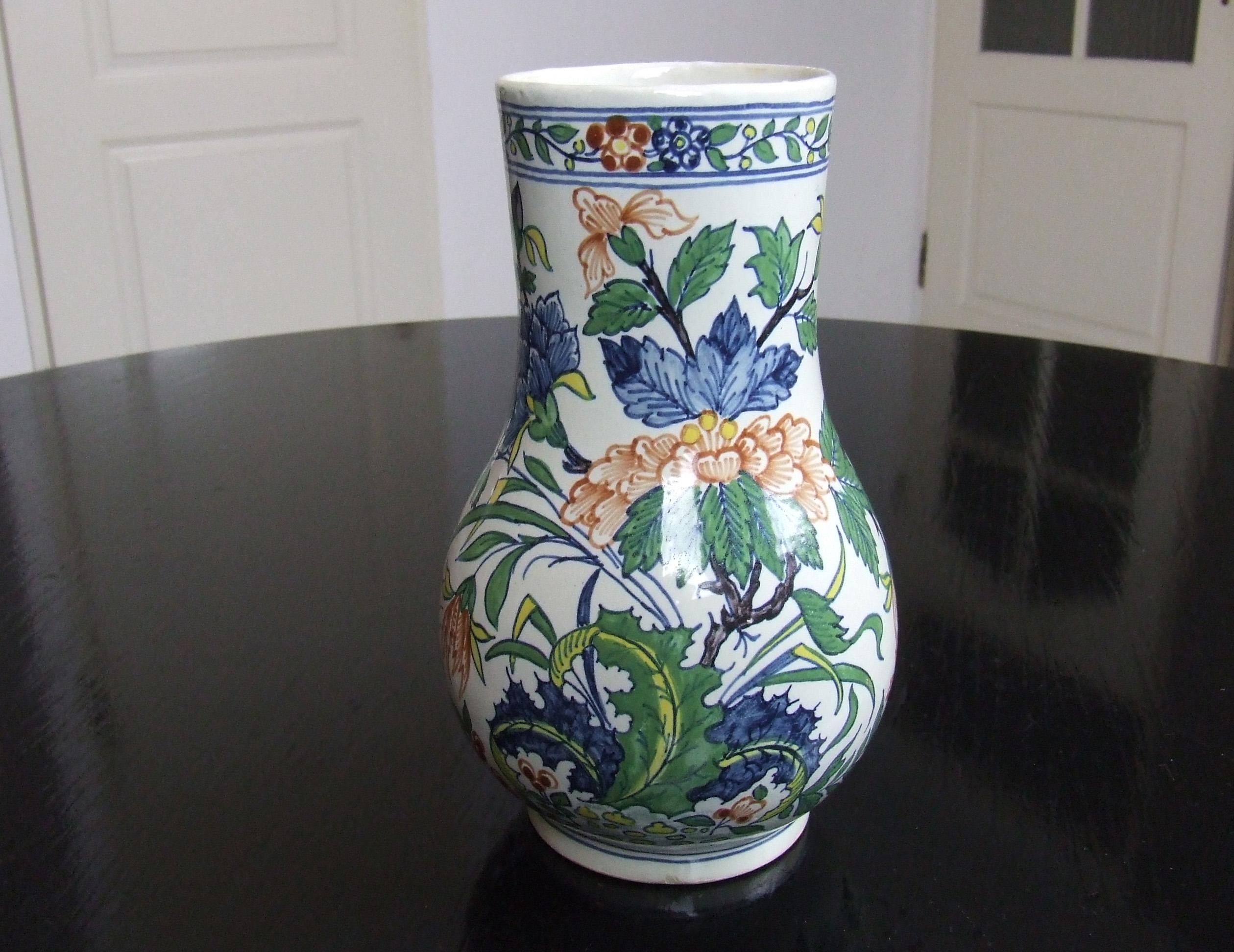
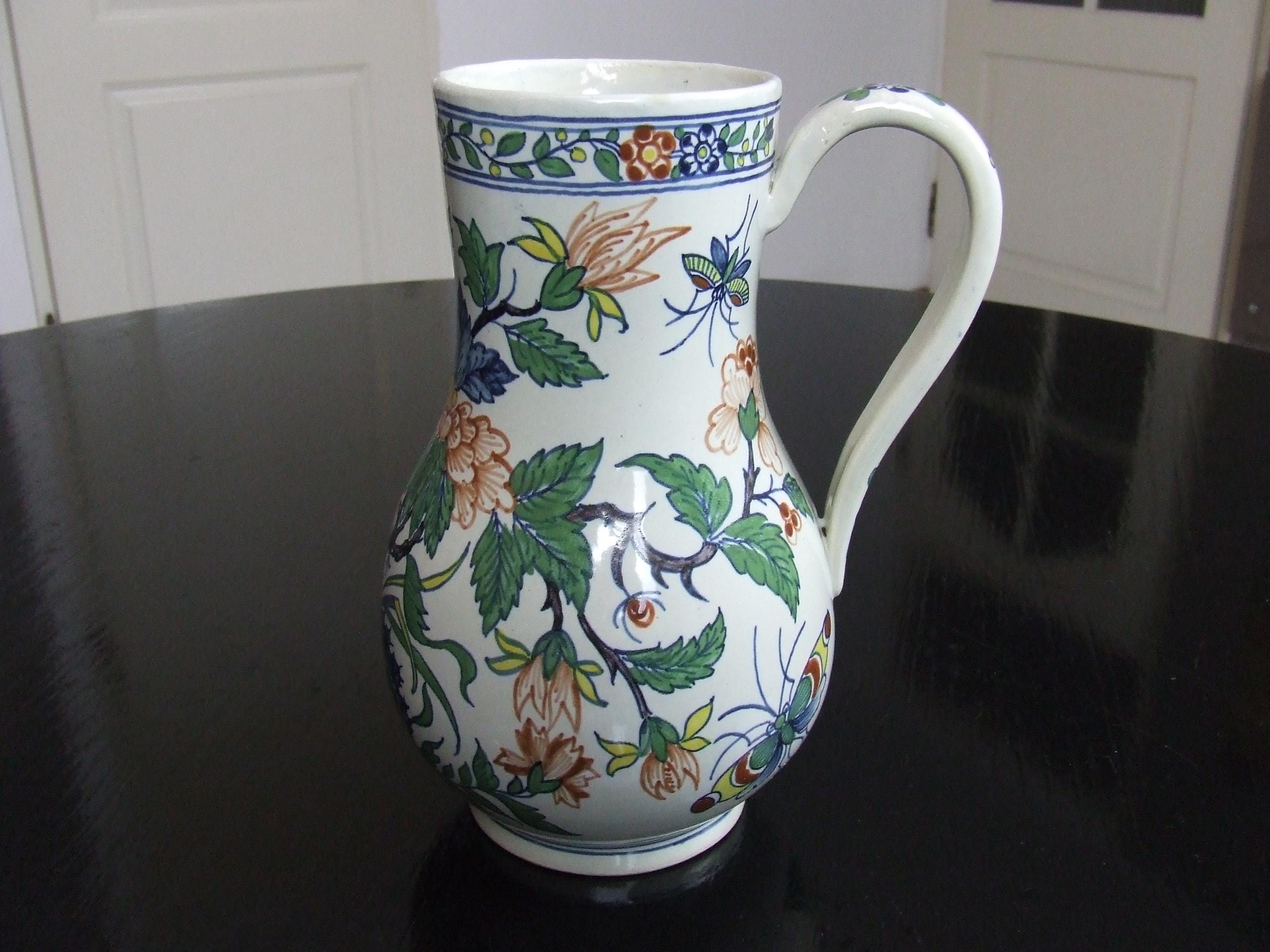
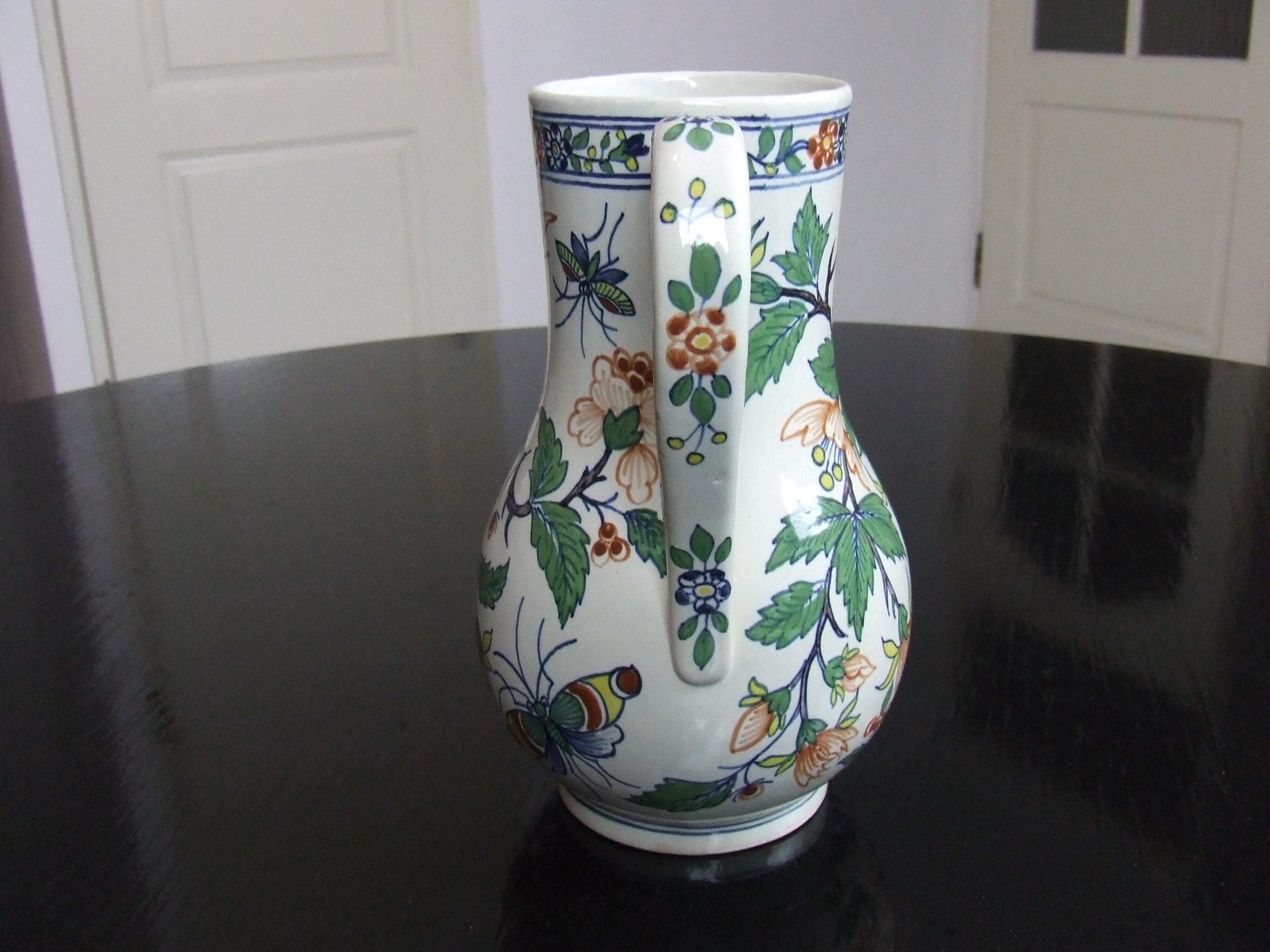
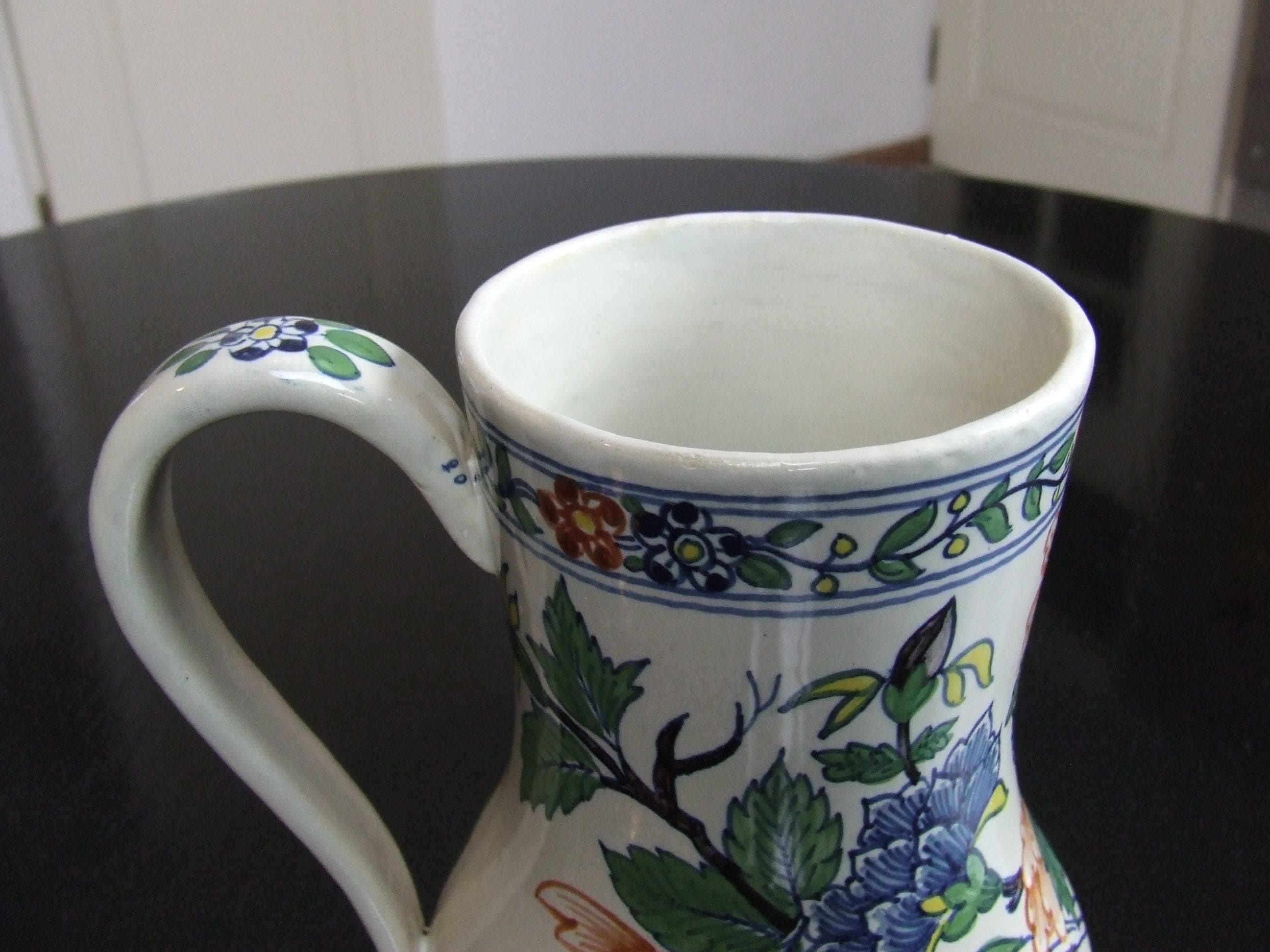
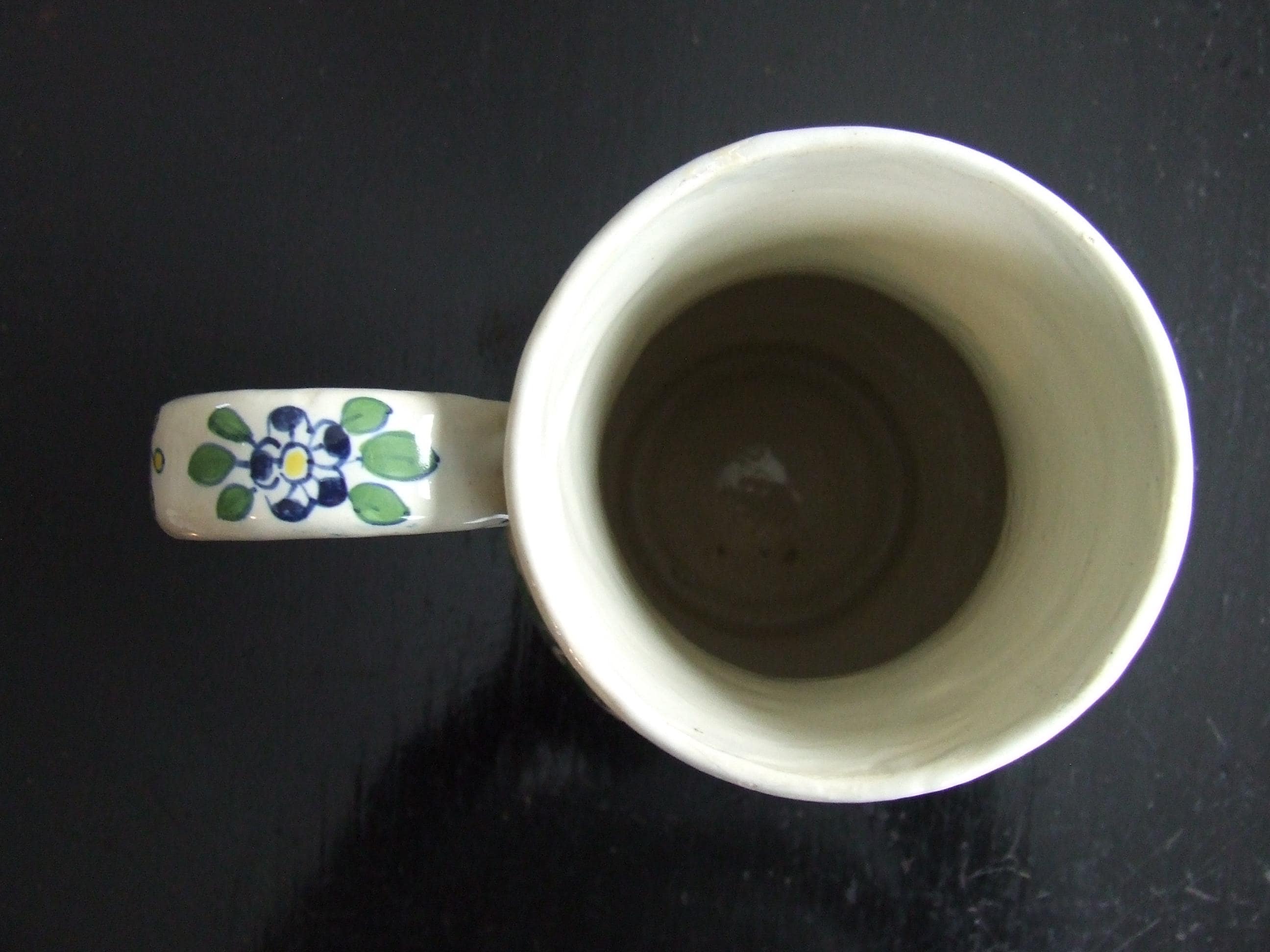
Medium to large (1,8 litre) handpainted tin-glazed pitcher made around 1943 by Tichelaar in Makkum, the Netherlands. The pitcher has a traditional shape without a pouring sprout. It features a polychrome Delft chinoiserie style decoration of plants and insects which encircles the body. The decoration is more naturalistic and "western" compared to usual Delft style decorations, which are usually very stylised. The handle and rim of the jar are decorated with matching leaf and flower ornaments.
This pitcher is handmade according to century-old traditions identical to how 17th or 18th century Delftware was made. The earthenware (made from local yellow clay) is shaped by hand in a mould and after a first firing glazed with an opaque white tin-glaze. The colours are then painted on this glaze and fused with it through a second firing. This creates a product with a beautiful and unique appearance. Tichelaar is the only remaining Delftware producer in the Netherlands that still follows this procedure.
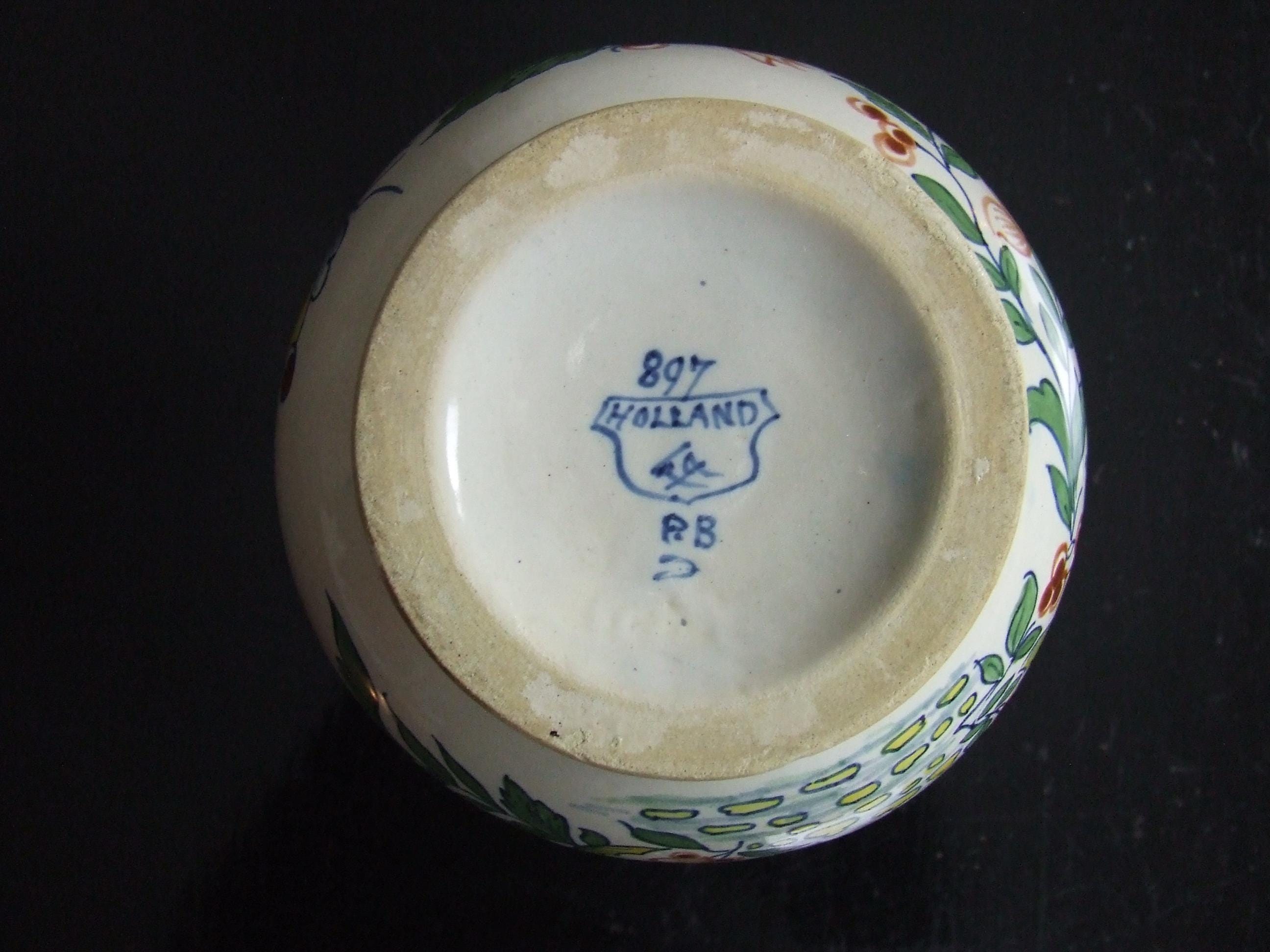
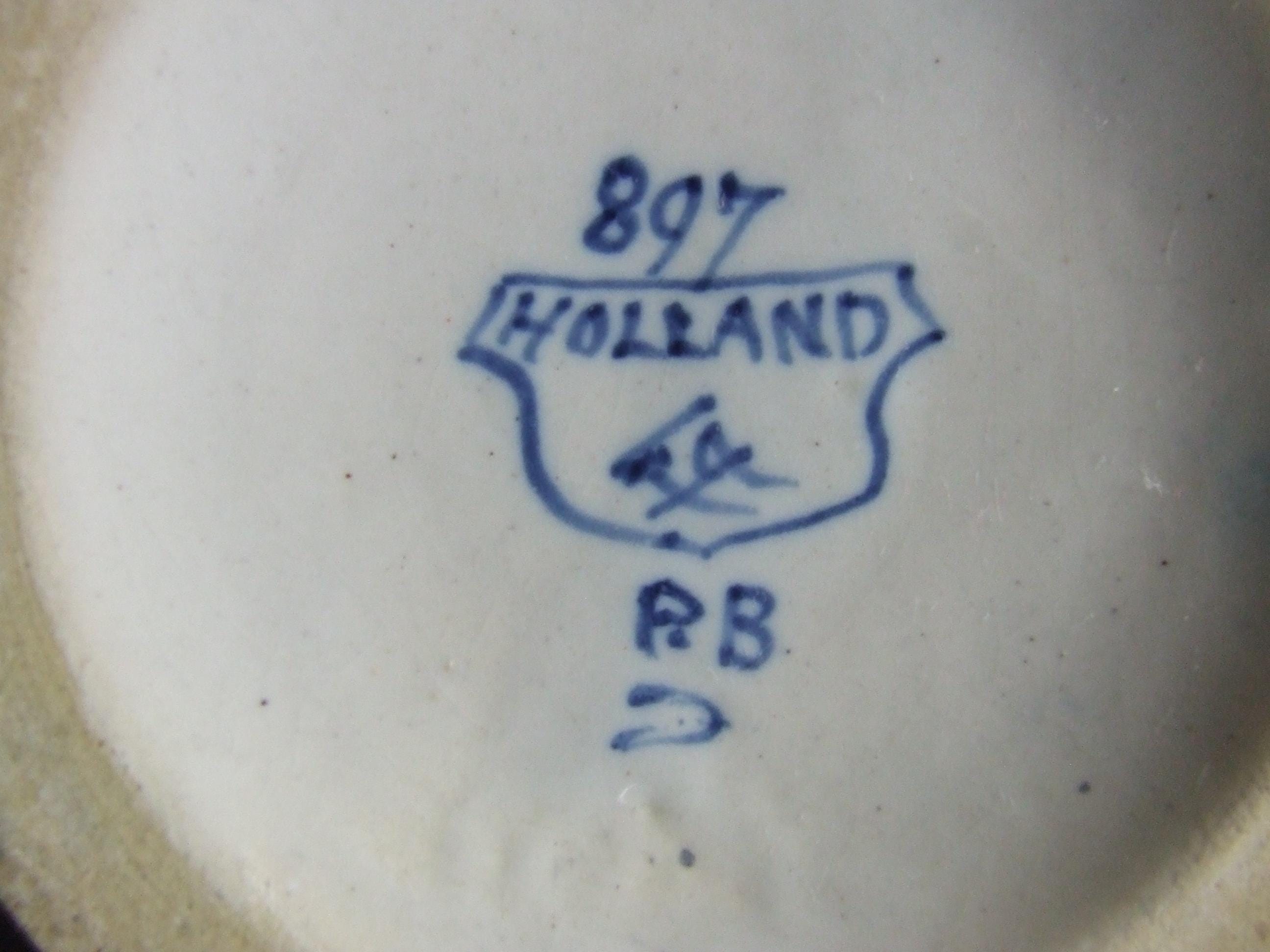
The pitcher is marked at the bottom with a handpainted Tichelaar shield mark with the designation "HOLLAND" and two crossed T's. This mark was in use for export ware by Tichelaar between 1893 and 1943. Above the shield mark we find an article number (897), this article number was produced only after 1941. Article numbers were only painted next to the shield mark from 1943 onwards. This allows us to conclude that this item is most likely painted in 1943 (or very near that year).
Below the shield mark we find the letters "P. B" and a swirl. It is tempting to think these are painter's initials, but painter's initials were only added to the Tichelaar mark from 1955 onwards. Also, the only Tichelaar painter known to have used a PB mark was Mr. Pieter Bonnema, but his mark had quite a different style and he only started working at Tichelaar around 1968. So the P. B mark means something else than painter's initials. Our theory is that this jug is a prototype, a model to be painted after. The age would match (the model 897 was introduced somewhere between 1941 and 1946) and the P. would then stand for "prototype" (which in Dutch is the same word) and the "B" perhaps for the second prototype?
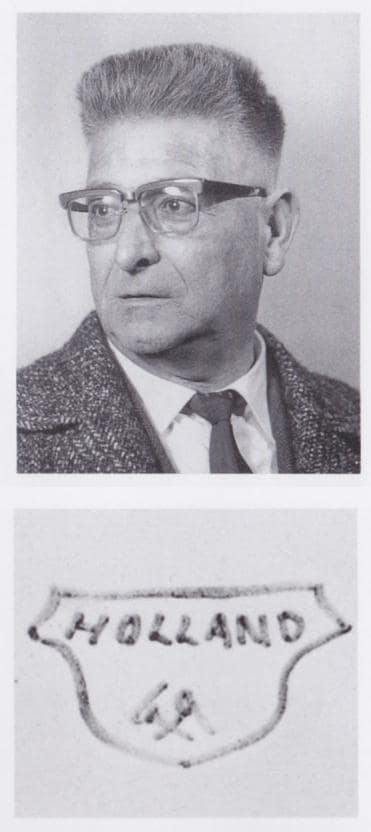
The way the shield mark is painted points to the jar having been painted by Mr. Sijbren van der Wal, who worked at Tichelaar from 1925 till 1968. See the last picture for a very similar mark known to have been painted by him (Literature: Fries Aardewerk- Tichelaar Makkum 1868 - 1963, by Pieter Jan Tichelaar). Perhaps the swirl beneath the P. B is actually a "S" from Sijbren?
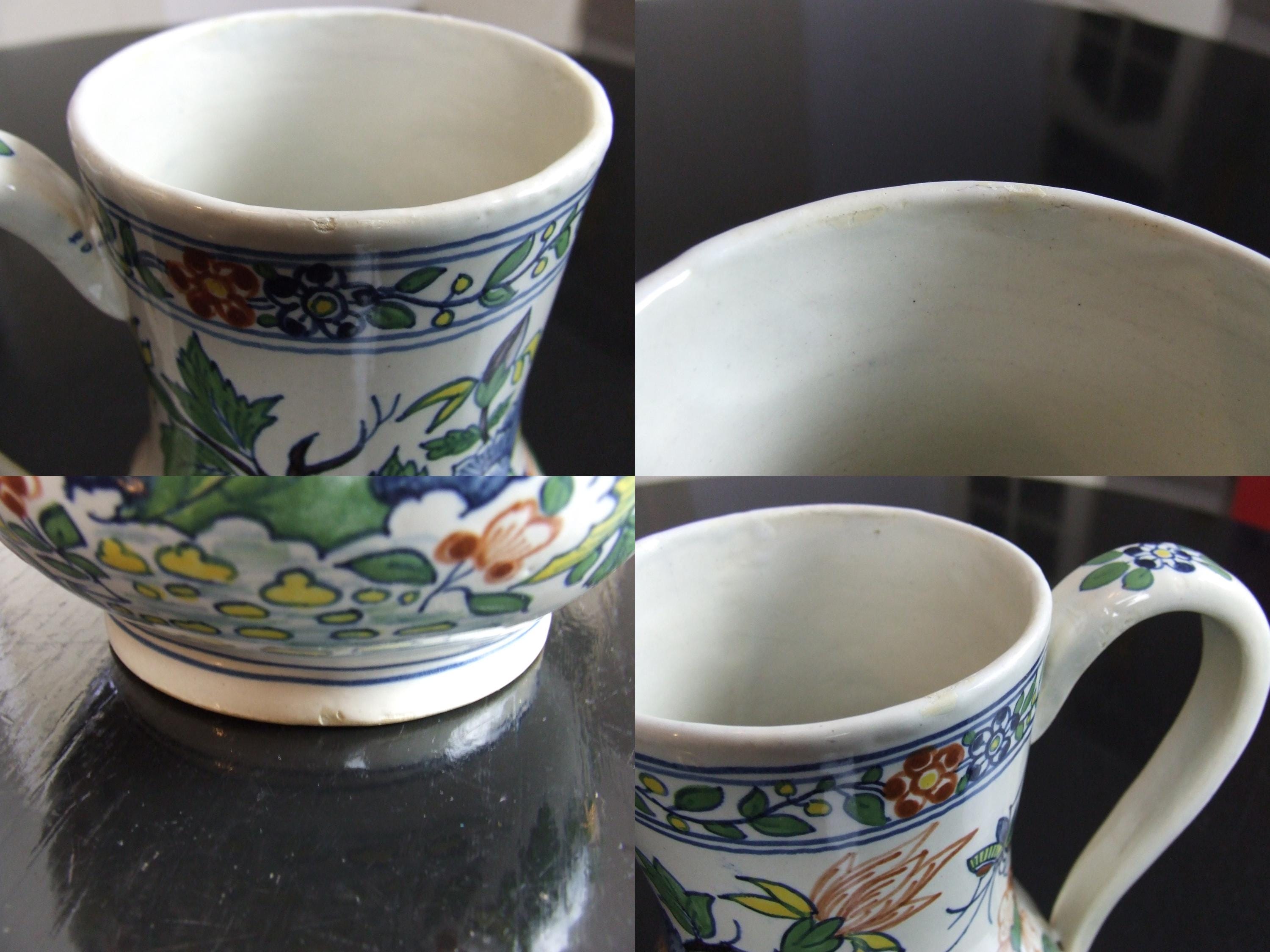
Condition: very good, except that the glazing is quite irregular and there are many factory-made corrections, visible on the foot rim, upper rim and near the foot (see detail pictures). The irregularity near the foot that looks like a chip is actually a glazing / baking artefact if you study it in close-up (it has no sharp edges). Aside from the glazing irregularities, the jug is in a fine condition, there are no cracks or hairlines and the glaze shows very little wear. There is no crazing and the glaze has a nice, gentle gloss.
A beautiful pitcher of good size, very decorative. If our theory is true that this actually is a prototype (model item) from the Tichelaar factory, then this is a unique item for Tichelaar collectors.
Made by: Royal Tichelaar
Place of manufacture: Makkum, the Netherlands
Year of manufacture: around 1943
Method of decoration: handpainted (tin-glaze)
Size: height: 23,5 cm, width (including handle): 20 cm, depth: 14 cm (capacity: 1,8 litre)
Weight: 900 g
Additional pictures of the object can be provided if required.
----------------------------------------------------------------------
About Tichelaar:
Royal Tichelaar is located in a small fishing village in the north of the Netherlands, Makkum. The history of the company goes way back to 1572, making it the oldest continuously operating company in the Netherlands. Tichelaar means "tile-maker", and at first the factory only produced bricks and tiles, but around 1700 production also started of tin-glazed household and ornamental dishes. After 1890 a large part of the production became oriented towards ornamental Delftware in various forms and styles. Tichelaar uses a yellow baking clay for their products, which is locally excavated. After baking it receives a white tin-glaze and is subsequently decorated. This is the way all Delftware was produced centuries ago, and Tichelaar is the only remaining factory to still do so. Other Delftware producers in the Netherlands around 1900 switched to painting directly on white baking clay without the extra layer of tin-glaze. True to the spirit of tradition, Tichelaar keeps mechanisation to a minimum and all items remain handpainted. The quality of the handpainting is very good, it has a distinctive "Frisian" character that is very recognisable.
Tichelaar today still produces some Delftware, but on a very limited scale. The traditional production process makes that the items are nowadays very costly to produce, and for many too expensive to buy. A small number of items is still produced and offered through the shop on their website. The company nowadays has its main focus on producing speciality tiles, with special glazes for architecture / building purposes. More information can be found on their website: https://www.tichelaar.com/.
----------------------------------------------------------------------
This beautiful item will be carefully packed and send by tracked and insured mail.
If you buy multiple items from our shop in one purchase, we will try to combine the items into one parcel. Any excess shipping costs will be refunded.
If you are not satisfied with your purchase, you may contact us within 14 days from the delivery date to return the item. If the item is returned in its original condition, we will issue a refund for the total purchase price of the item (return shipping costs are however not covered).
Buyers are responsible for any customs and import taxes that may apply.
Shipping from The Netherlands
Processing time
1-2 business days
Customs and import taxes
Buyers are responsible for any customs and import taxes that may apply. I'm not responsible for delays due to customs.
Payment Options
Returns & Exchanges
I gladly accept returns
Just contact me within: 14 days of delivery
Ship items back to me within: 30 days of delivery
I don't accept exchanges or cancellations
But please contact me if you have any problems with your order.
Conditions of return
Buyers are responsible for return shipping costs. If the item is not returned in its original condition, the buyer is responsible for any loss in value.
Frequently Asked Questions
What are your shipping times?
We will send off your order within one or two working days. We use the standard parcel service of PostNL to ship our parcels. You can find their estimated delivery times per country here (shortened link to pdf download of PostNL): https://bit.ly/3ZHTMJ9. In the fourth column (parcels) you can find the delivery times of the standard service (in estimated business / working days). Please keep in mind that customs / import procedures in non-EU countries can sometimes add an extra week (or even two weeks) to the delivery times.
For shipments to the USA we use UPS delivery to guarantee a smooth import process. Estimated delivery time is approximately 5 working days after shipping, if all import duties are paid in time by buyer.
How do you pack your items, will my item arrive safely?
Broken ceramics is a thing we do not like! Not only is it a waste of time and money, but it also (often) means the end for a rare and unique item, which was treasured and cared for by their previous owners. So we really want to avoid any damages during shipping!
We have lots of experience of shipping ceramics, and we have seen what works and what does not work to protect ceramics during transit. If we ship multiple items in one package, each item is carefully wrapped and kept well seperated from the other items. We use large boxes, with plenty of buffer all around the items, so the packages can withstand a lot of abuse. All our packages should be able to cope with a 1,5 m drop without the items getting damaged.
Do you take care of the environment?
Yes we do. We re-use packaging materials as much as possible, which means we rarely need to buy new materials for our packaging. Only foam peanuts are sometimes bought by us, in which case we prefer to use green starch based peanuts which are fully biodegradable, non-toxic and water-soluble.
Each year, we calculate the greenhouse gas emissions in CO2-equivalents caused by our shipping. We multiply that amount by 200% and then offset it in certified CO2 compensation projects based on tree planting / reforestation in various parts of the world. So far, we have offset 35,5 tonnes of CO2 emissions in projects in Bolivia and Borneo (Indonesia). See https://treesforall.nl/en/projects/ for more information on the projects.
How should I take care of my Dutch ceramics?
First of all, don't let them fall! Always handle them in a mindful way and put them in spots where they cannot be accidentally bumped over when cleaning or vacuuming. Some people put some (clean) sand in vases to make them more stable.
Second, don't clean them too often! Underglaze painted Gouda and Delftware can be perfectly cleaned with water if necessary, but often just dusting them off or polishing them up a bit with a soft dry cloth is enough. Overglaze painted items should not be cleaned too often.
The colours of ceramics do not fade in sunlight, so you can put them in bright spots where they look good. But do avoid large temperature differences, which will cause increased crazing in many Delftware and also Gouda type pieces.